
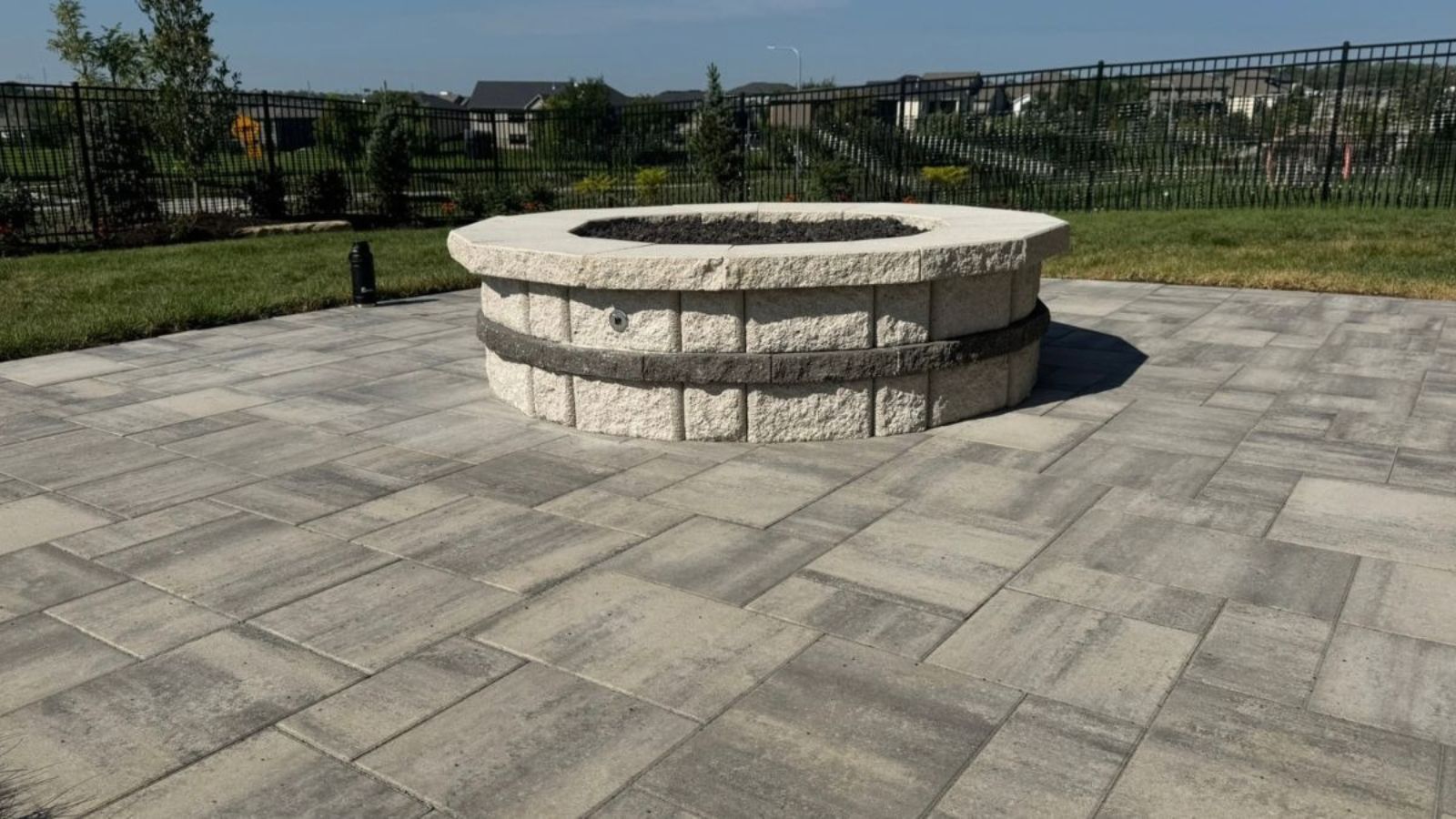
As fall approaches, Omaha homeowners often look for ways to extend the Midwest patio season beyond the warmest months. A well-planned fire pit and functional hardscape can make cooler evenings more comfortable without changing how the entire outdoor space is used.
The key is planning these features around the patio’s layout, weather exposure, seating, drainage, and intended use. A fire pit alone does not make a patio more usable in cooler weather.
Start With How the Patio Will Be Used
A common misconception is that a larger patio automatically provides a longer outdoor-living season. An oversized space can be less useful if seating, the fire feature, and circulation are not planned around how people gather.
Consider how the patio will function during cooler months:
- Small gatherings: A defined seating area around a fire feature may provide enough space without expanding the entire patio.
- Outdoor dining: The fire pit may work better as a separate zone so it does not interfere with tables and chairs.
- Frequent evening use: Convenient access, lighting, and seating become more important when daylight hours are shorter.
- Larger gatherings: More circulation space may be needed around the fire feature and between activity areas.
- Mixed-season use: The layout should work when the fire pit is being used and when it is not.
A patio can look impressive on a plan but become underused if people have to cross an awkward route or rearrange furniture to use the fire feature.
Fire Pit Placement Can Affect Comfort
A fire pit may seem like a feature that can be placed wherever there is enough room. Site conditions can make one location considerably more practical than another.
Wind is an important consideration. A wood-burning fire can send smoke toward seating, doors, windows, or other areas of the property depending on its location and surrounding conditions.
The proposed location should be evaluated for:
- Clearance: Appropriate space is needed between the fire feature and surrounding structures or combustible materials.
- Wind exposure: The location should account for how smoke and wind may affect nearby areas.
- Circulation: The fire feature should not interrupt the main route between the house and yard.
- Visibility: The fire pit should function as a gathering feature without becoming an obstacle.
- Drainage: The location should work with existing water flow rather than creating a low spot.
Seating should be close enough for conversation without forcing people to cross through the fire area. These decisions are easier to address during design than after installation.
Hardscape Materials Need to Work Beyond Summer
Another recurring mistake is choosing patio materials based primarily on appearance. In Omaha, the finished hardscape also needs to function through moisture, temperature changes, and freeze-thaw conditions.
The visible surface is only one part of the installation. Subgrade preparation, the supporting base, grading, and drainage all affect how the finished patio handles seasonal weather.
Common hardscape considerations include:
| Consideration | Why It Matters |
|---|---|
| Surface material | Affects appearance, maintenance, durability, and overall design |
| Base preparation | Provides support for the finished hardscape |
| Drainage | Helps direct water away from the patio and surrounding structures |
| Grade | Influences how water moves across the property |
| Connections | Determines how the patio transitions to walkways, lawn, steps, or the house |
| Maintenance | Affects ongoing care requirements |
Drainage deserves particular attention because water with nowhere to go can contribute to muddy areas, erosion, or water collecting near structures.
On properties with elevation changes, retaining walls may also help create usable level areas while defining different parts of the landscape.
Plan the Fire Feature With the Hardscape
A fire pit should not be treated as an accessory added after the patio is finished. Its installation requirements can affect the hardscape before any surface material is placed.
The fire feature’s footprint and supporting base need to be considered alongside the patio construction. Depending on the system, the design may also need to accommodate fuel connections, installation access, and required clearances.
The hardscape plan may need to account for:
- The size and location of the fire feature
- The appropriate supporting surface or base
- Required clearances
- Fuel-system access where applicable
- The transition between the fire feature and patio material
- Access for future maintenance
Leaving these decisions until the patio is nearly complete can limit available space, access points, and construction options.
Coordinating the fire feature with the hardscape from the beginning can help the finished space look intentional rather than modified after construction.
Small Details Can Extend the Midwest Patio Season
Extending the Midwest patio season does not always require a major addition. Smaller details can affect whether homeowners continue using the space as the seasons change.
Lighting is one example. Shorter fall days can make poor lighting a practical limitation even when the patio itself remains comfortable.
Access matters as well. If outdoor furniture, firewood, or other items are difficult to reach, the patio may be used less frequently.
Homeowners should also consider:
- Seating position: Arrange chairs to take advantage of the fire without restricting movement.
- Lighting: Provide enough illumination for paths, steps, and gathering areas.
- Storage: Plan practical locations for firewood, cushions, or outdoor accessories.
- Transitions: Keep the route between the house and patio easy to navigate.
- Weather exposure: Consider wind, shade, and existing landscape features.
These details may not be the most noticeable parts of the finished project, but they can directly affect seasonal usability.
Make More of the Patio Through the Seasons
A longer Midwest patio season comes from designing the outdoor space for changing conditions rather than treating a fire pit as a standalone addition.
For Omaha homeowners, that means considering the patio’s use, fire-feature placement, hardscape preparation, drainage, lighting, and access as parts of the same plan. Coordinating these elements from the beginning can create a practical outdoor living area that remains useful beyond the peak of summer.
Frequently Asked Questions
Is it possible to add a fire pit to an existing patio?
It depends on the existing patio’s construction, available space, and the requirements of the selected fire feature. The surface, supporting base, clearances, fuel source, and installation access should be evaluated first.
Does a fire pit always need a separate seating area?
No. A fire pit can be incorporated into a larger patio if the layout leaves enough room for comfortable seating, circulation, and other activities.
How can drainage problems be addressed during a new patio project?
Drainage should be considered while the patio grade, base, and surrounding landscape are being planned. Addressing water movement during construction is more practical than trying to correct pooling after the hardscape is complete.
Are retaining walls useful around patios?
They can be particularly useful on properties with elevation changes. A retaining wall can help create a more usable level area while defining the relationship between the patio and surrounding landscape.
What should homeowners consider before adding a fire feature?
Start with the intended use and available space, then consider location, clearances, fuel requirements, supporting surfaces, drainage, and installation access. Planning these details early can prevent the fire feature from becoming an awkward addition later.
Antler Country Landscaping Omaha
Antler Country Landscaping was incorporated in 1997 and, over the years, has grown to offer professional landscape services, lawn care, and outdoor living spaces. Our mission is to enhance your outdoor experience. Contact us to learn more about our Omaha landscaping services.