
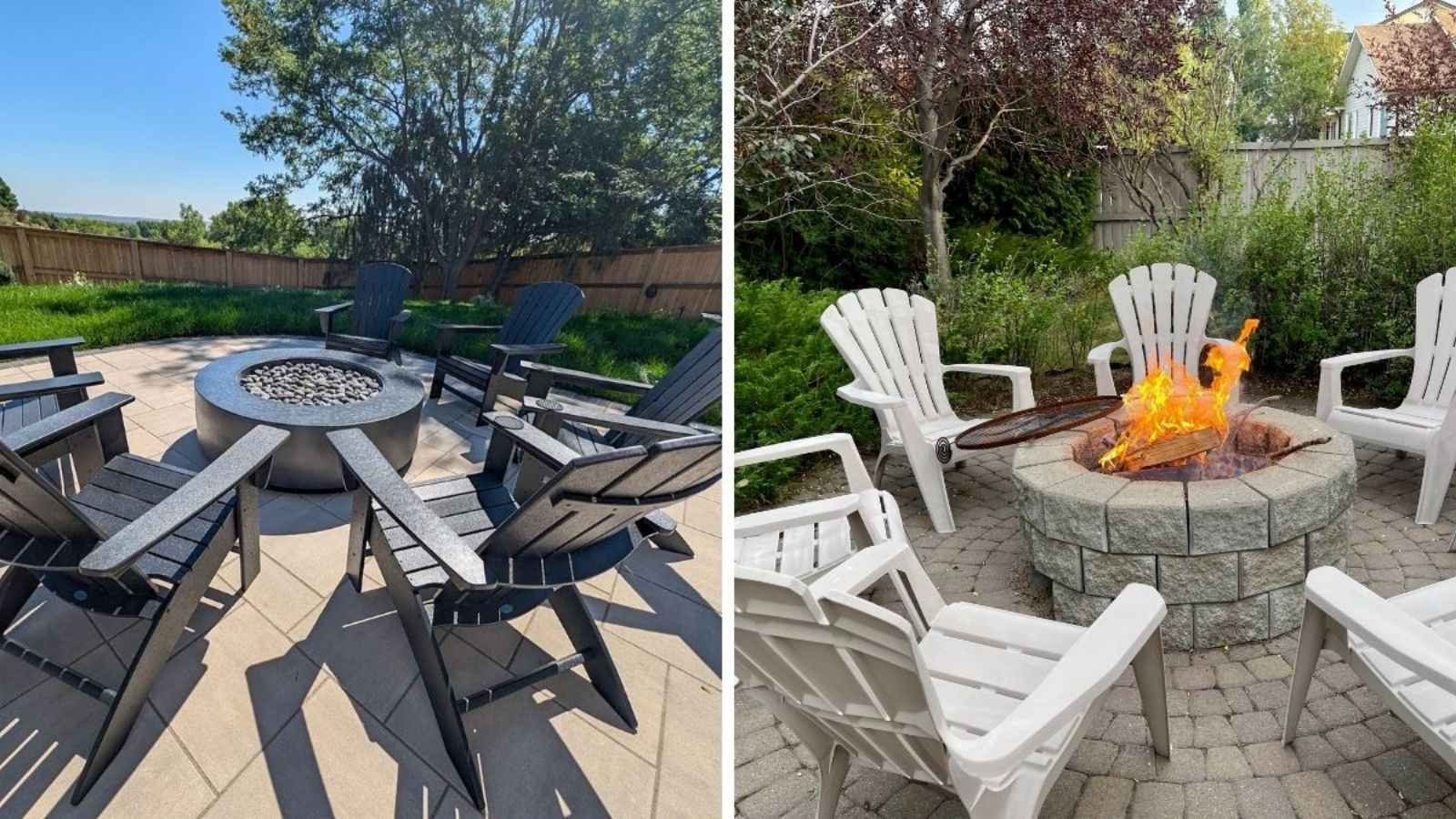
As fall approaches, fire pits become a common feature in Omaha outdoor living plans. A recurring question is which option makes more sense for a particular patio: gas or wood-burning.
The choice is not only about how the fire looks. Fuel type affects how the feature is started, maintained, positioned, and used throughout the season.
The key distinction in gas vs wood burning fire pits is how each option fits the way the patio will actually be used.
Start With How the Fire Pit Will Be Used
A common misconception is that gas is simply the convenient option and wood-burning is simply the traditional option. The better choice depends on how the patio will be used.
A gas fire pit can generally be started without bringing out firewood or preparing kindling. Once the gathering ends, there is no wood ash to remove.
A wood-burning fire requires more preparation. Firewood needs to be available, the fire needs to be built and monitored, and ash remains after the fire is finished.
The intended use can help narrow the choice:
- Frequent short sessions: Gas can be practical when quick operation is important.
- Planned gatherings: Wood burning can suit occasions where building and tending the fire are part of the experience.
- Limited storage: A gas feature eliminates the need for a dedicated firewood storage area.
- Traditional fire experience: Wood provides changing flames, smoke, and the sound of burning wood.
- Simple cleanup: Gas avoids the ash produced by burning firewood.
A fire pit that looks appropriate in a design can still become underused if its operating requirements do not fit the household.
Gas vs Wood Burning Fire Pits Have Different Requirements
The differences become more apparent once the fire pit is part of an actual patio.
| Consideration | Gas Fire Pit | Wood Burning Fire Pit |
|---|---|---|
| Starting the fire | Generally quick to operate | Requires firewood and preparation |
| Cleanup | No wood ash | Ash and burned wood require removal |
| Fuel | Gas connection or approved fuel supply | Firewood storage |
| Smoke | No wood smoke | Produces wood smoke |
| Flame | More controlled | Changes as the wood burns |
| Ongoing care | Burner and ignition components require care | Fire pit and ash require regular attention |
| Installation planning | Fuel source and system requirements | Fire safety, smoke, sparks, and wood storage |
A recurring planning issue is choosing the fire pit before considering what the selected fuel type requires.
A wood-burning feature needs practical access to firewood and consideration for smoke and sparks. A gas feature requires its fuel source and system components to be incorporated into the installation plan.
These requirements are easier to address before patio construction than after the hardscape is complete.
Site Conditions Can Affect Fire Pit Placement
A fire pit may look ideal in a particular corner of a patio but function poorly once the space is being used.
This is especially important with wood-burning features because wind can carry smoke toward seating areas, doors, windows, covered patios, or outdoor dining spaces.
The proposed location should be evaluated for:
- Clearance: Space is needed between the fire feature and surrounding structures or combustible materials.
- Circulation: Seating should not block the main route between the patio and house.
- Existing construction: An existing patio may need to be evaluated before supporting or modifying a fire feature.
- Fuel access: Firewood or the gas supply needs to be practical for the selected design.
- Drainage: The fire pit area should work with the patio’s existing drainage plan.
The surrounding hardscape matters as well. Pavers, natural stone, concrete, and other materials can create different visual results, but the fire feature still needs an appropriate base and installation approach.
The amount of space around the fire also matters. Chairs should have enough room without narrowing walkways or placing people too close to the fire.
Planning these details before installation can prevent a fire pit from becoming an obstacle within an otherwise functional patio.
Maintenance Can Determine Which Option Fits Better
A fire pit is more likely to be used regularly when its maintenance requirements are manageable.
Wood burning requires more hands-on care. Firewood needs to be stored properly, fires need to be monitored, and ash needs to be removed after the fire has cooled appropriately.
Gas eliminates wood storage and ash cleanup, but it still requires care. Burners, ignition components, connections, and other system elements need appropriate inspection and maintenance.
The practical question is not whether one option is maintenance-free. Neither is. The question is which type of upkeep fits the intended use of the patio.
Understanding these differences is an important part of comparing gas vs wood burning fire pits, particularly when the patio is intended for regular or spontaneous evening use.
A household that does not want to store firewood may prefer gas. A household that enjoys preparing and tending a traditional fire may consider the additional work worthwhile.
How to Choose the Better Fire Pit Option
There is no single fuel type that works best for every Omaha patio.
When comparing gas vs wood burning fire pits, the better option depends on the combination of use, maintenance, site conditions, and fire experience that fits the property.
Gas may be the better fit when:
- Quick operation is important.
- Wood storage is inconvenient.
- Minimal ash cleanup is preferred.
- A more controlled flame is desirable.
- The fire pit will be used for shorter or spontaneous sessions.
Wood burning may be the better fit when:
- The traditional fire experience is a priority.
- Firewood storage is practical.
- Smoke is unlikely to interfere with the patio or house.
- Building and tending the fire are part of the experience.
- The patio has enough space for the fire feature and surrounding clearances.
The property itself should also be evaluated before the final selection. Fuel access, available space, existing hardscape, circulation, and seating can all affect which option is practical.
Frequently Asked Questions
Can a gas fire pit be used under a covered patio?
Not necessarily. The answer depends on the specific fire feature, structure, manufacturer requirements, and applicable safety requirements.
Is natural gas or propane better for a gas fire pit?
Neither is universally better. The appropriate fuel depends on what is available at the property, the installation plan, and the requirements of the selected fire feature.
Does a wood-burning fire pit need a chimney?
Not every outdoor wood-burning fire feature uses a chimney. The selected system determines how smoke is managed and should be evaluated according to its intended installation.
Can a fire pit be added to an existing patio?
Possibly. The existing patio construction, available space, selected fire feature, and installation requirements need to be evaluated before adding the feature.
Does a fire pit need to be the center of the patio?
No. A fire feature can create a separate gathering area within a larger outdoor living space. Its position depends on the property’s layout, seating, circulation, and other patio functions
Antler Country Landscaping Omaha
Antler Country Landscaping was incorporated in 1997 and, over the years, has grown to offer professional landscape services, lawn care, and outdoor living spaces. Our mission is to enhance your outdoor experience. Contact us to learn more about our Omaha landscaping services.