
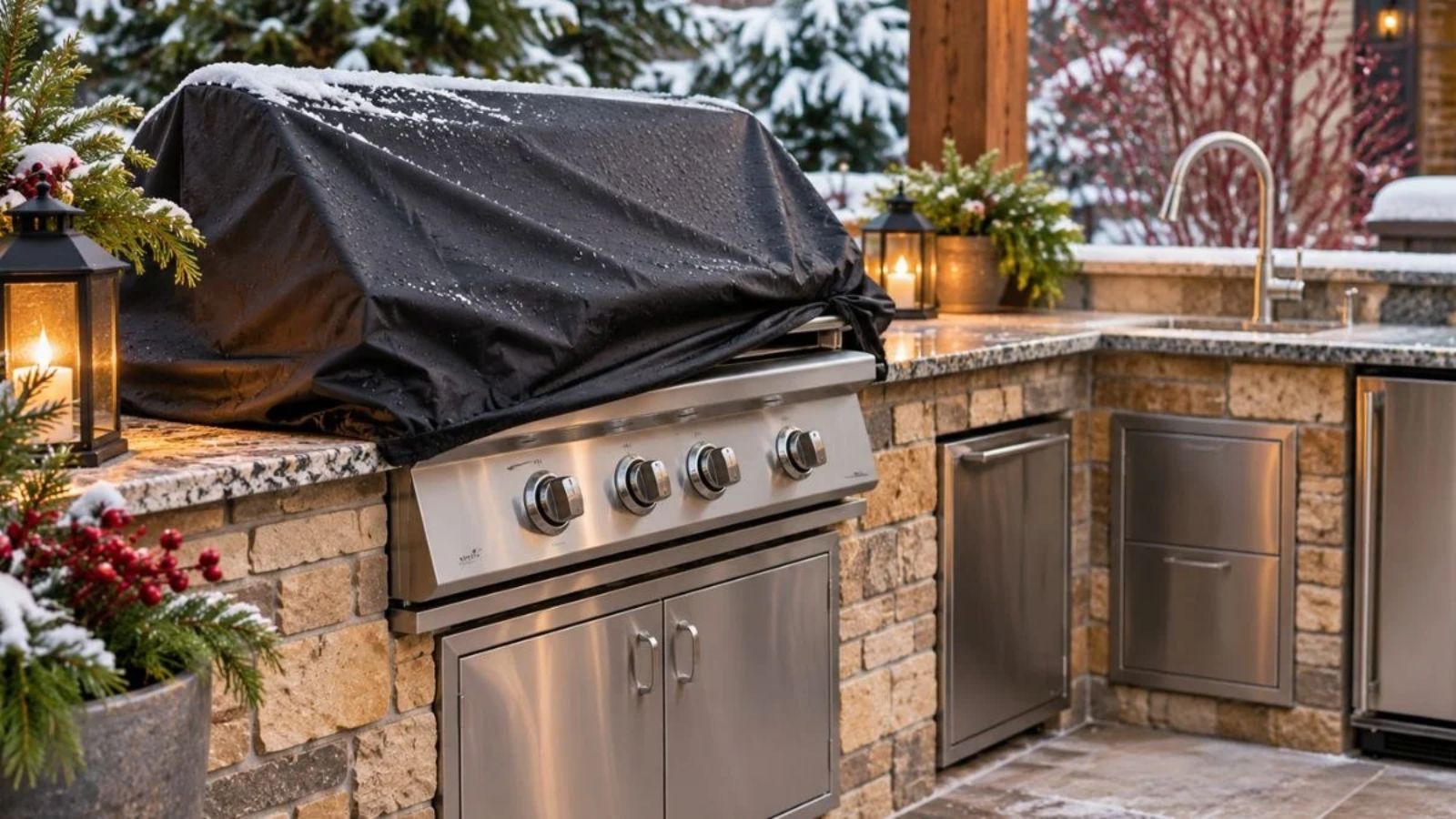
As fall temperatures drop across Omaha and the surrounding Midwest, outdoor kitchens need protection from freezing weather. Built-in grills may tolerate cold conditions, but plumbing, gas connections, cabinetry, countertops, and other components require attention before winter arrives.
Water trapped in supply lines, grease left inside cooking components, and moisture beneath poorly fitted covers can cause problems during months of inactivity.
Winterizing outdoor kitchens involves more than covering the grill. Each component needs preparation based on its materials, connections, and exposure to winter weather.
Start With an Inspection of the Entire Outdoor Kitchen
Before cleaning or disconnecting anything, inspect the kitchen for damage and maintenance needs. Check these areas:
| Component | What to inspect |
|---|---|
| Countertops | Cracks, loose joints, and deteriorating sealant |
| Cabinetry | Damaged doors, hinges, and frames |
| Grill enclosure | Blocked ventilation and damaged access panels |
| Gas connections | Corrosion, damaged hoses, and deteriorating fittings |
| Plumbing | Exposed pipes, faucets, and water-connected appliances |
| Electrical components | Outdoor outlets, lighting, and ignition connections |
| Drainage | Areas where water collects near the kitchen |
Make a list of damaged or questionable components. Addressing these problems before winter helps prevent minor issues from becoming more serious. Repairs involving gas lines or electrical connections should be handled by qualified professionals.
Clean and Prepare Built-In Gas Grills for Winter
Grease, food residue, moisture, and insects can affect grill components during extended periods of inactivity.
Allow the grill to cool completely and follow the manufacturer’s shutdown instructions. Turn off the appropriate gas supply before cleaning.
Clean the cooking components:
- Remove cooking grates, warming racks, and removable heat plates according to the owner’s manual.
- Clean them with products approved for their materials.
- Empty the grease tray and collection system.
- Remove accumulated grease from hard-to-reach areas.
- Dry removable components before reinstalling or storing them.
Grease can attract pests and create fire hazards when the grill is used again.
Inspect the burners and ignition system.
Look for corrosion, blocked openings, damaged components, and signs of insect activity. Spiders can build webs inside burner tubes, restricting gas flow and potentially causing improper ignition or fires.
Also:
- Check burner covers and heat shields.
- Remove ignition-system batteries when recommended by the manufacturer.
- Store removable accessories, such as rotisserie motors, according to their instructions.
Avoid applying oil or inserting protective materials into gas openings unless the manufacturer recommends it. Cleaning and storage requirements vary by grill model.
Protect Gas Connections and Outdoor Kitchen Plumbing
Gas and water systems require separate winterization procedures.
For propane grills:
- Follow the manufacturer’s instructions for shutting off the cylinder and preparing the regulator.
- Keep removed cylinders upright in an appropriate outdoor location.
- Never store propane cylinders inside a house, garage, basement, or shed.
For natural gas grills:
- Turn off the designated appliance shutoff valve according to the installation instructions.
- Do not disconnect permanent gas piping or attempt repairs yourself.
- Have a qualified technician handle gas-line repairs or suspected leaks.
Drain the water system before freezing temperatures arrive.
Water trapped inside pipes can expand as it freezes, potentially splitting pipes or damaging fittings. Prepare the system by following these steps:
- Shut off the outdoor kitchen’s water supply.
- Open faucets and designated drain points.
- Drain exposed supply lines according to the plumbing system’s design.
- Check sinks, including faucets, supply lines, and drain traps.
- Follow manufacturer instructions for winterizing ice makers and other water-connected appliances.
- Have a professional address water trapped in inaccessible sections.
Turning off the water supply alone may not be enough. Low points, valves, and appliance connections can retain water.
Outdoor refrigerators and beverage coolers also need model-specific preparation.
| Component | What to check |
|---|---|
| Operating temperature | Confirm the manufacturer’s recommended range. |
| Power | Determine whether the unit should remain plugged in or be disconnected. |
| Interior | Remove food and clean the appliance if required. |
| Door | Follow storage instructions to prevent moisture and odors. |
Some units may need to be unplugged, emptied, cleaned, and left with the door slightly open. Always consult the owner’s manual.
Protect Countertops, Cabinets, and Outdoor Kitchen Finishes
Outdoor kitchen materials respond differently to moisture and freezing temperatures. Prepare each surface according to its material and finish.
Countertops and masonry: Porous stone can absorb water that may contribute to cracking or surface deterioration when it freezes.
- Check whether the countertop requires sealing.
- Use products approved for the specific material.
- Follow the manufacturer’s maintenance recommendations.
Cabinetry: Remove food and other items that could attract rodents or insects. Clean the interiors, allow them to dry, and check doors and seals for damage.
Stainless steel: Remove grease and food residue using cleaners suitable for the finish. Avoid harsh chemicals and abrasive pads that could scratch the surface.
Drainage: Make sure water flows away from the kitchen rather than collecting around its base. Snowmelt and winter precipitation can expose drainage problems, especially near patios, retaining walls, and landscaped areas.
Choose the Right Covers and Prepare for Spring
A properly fitted cover protects outdoor equipment from snow, rain, and debris, but it should not replace cleaning and maintenance.
For built-in grills:
- Choose a cover designed for the specific appliance model.
- Allow for ventilation required by the manufacturer.
- Let the grill cool and dry completely before covering it.
- Avoid plastic tarps that can trap moisture against metal surfaces.
Cover other appliances according to their individual instructions. Some equipment requires dedicated covers, while other components may need ventilation or specific storage conditions.
Before closing the kitchen, record damaged components, completed plumbing work, disconnected appliances, and repairs needed before spring.
When warmer weather returns:
- Remove covers and inspect for visible damage.
- Clear debris and insect activity from the grill.
- Restore water service carefully.
- Arrange professional inspections or leak testing when required by the manufacturer.
Prepare Now for a More Reliable Outdoor Kitchen Next Season
Winterizing an outdoor kitchen means protecting the entire installation, not just the grill. Cleaning cooking components, shutting down gas appliances correctly, draining vulnerable plumbing, and protecting surfaces can help prevent avoidable damage before the first deep freeze.
For Omaha homeowners planning outdoor living improvements, Antler Country Landscaping provides landscaping and hardscaping services in Omaha and surrounding communities. The team can help homeowners plan functional outdoor spaces that complement their properties.
Frequently Asked Questions
Can an outdoor kitchen stay uncovered during winter?
Some permanently installed components are designed for outdoor exposure, but grills and appliances generally benefit from manufacturer-approved protective covers. Countertops and cabinetry also need material-appropriate maintenance.
Should outdoor kitchen refrigerators be left running during winter?
Not necessarily. Check the appliance’s operating temperature range and storage instructions to determine whether it should remain plugged in or be emptied, cleaned, and unplugged.
Can snow be left on an outdoor kitchen countertop?
Heavy accumulation should be removed carefully when practical. Use tools that will not scratch or damage the surface, and avoid metal shovels or ice chippers on stone countertops.
Does an outdoor kitchen need maintenance if it is under a covered patio?
Yes. A roof reduces direct exposure to precipitation but does not eliminate condensation, wind-driven rain, or freezing temperatures. Plumbing and appliances still need winter preparation.
When should an outdoor kitchen be winterized?
Begin in fall and complete plumbing shutdown, appliance preparation, and protective covering before the first hard freeze. Waiting too long can leave water trapped in pipes and appliance connections.
Antler Country Landscaping Omaha
Antler Country Landscaping was incorporated in 1997 and, over the years, has grown to offer professional landscape services, lawn care, and outdoor living spaces. Our mission is to enhance your outdoor experience. Contact us to learn more about our Omaha landscaping services.