
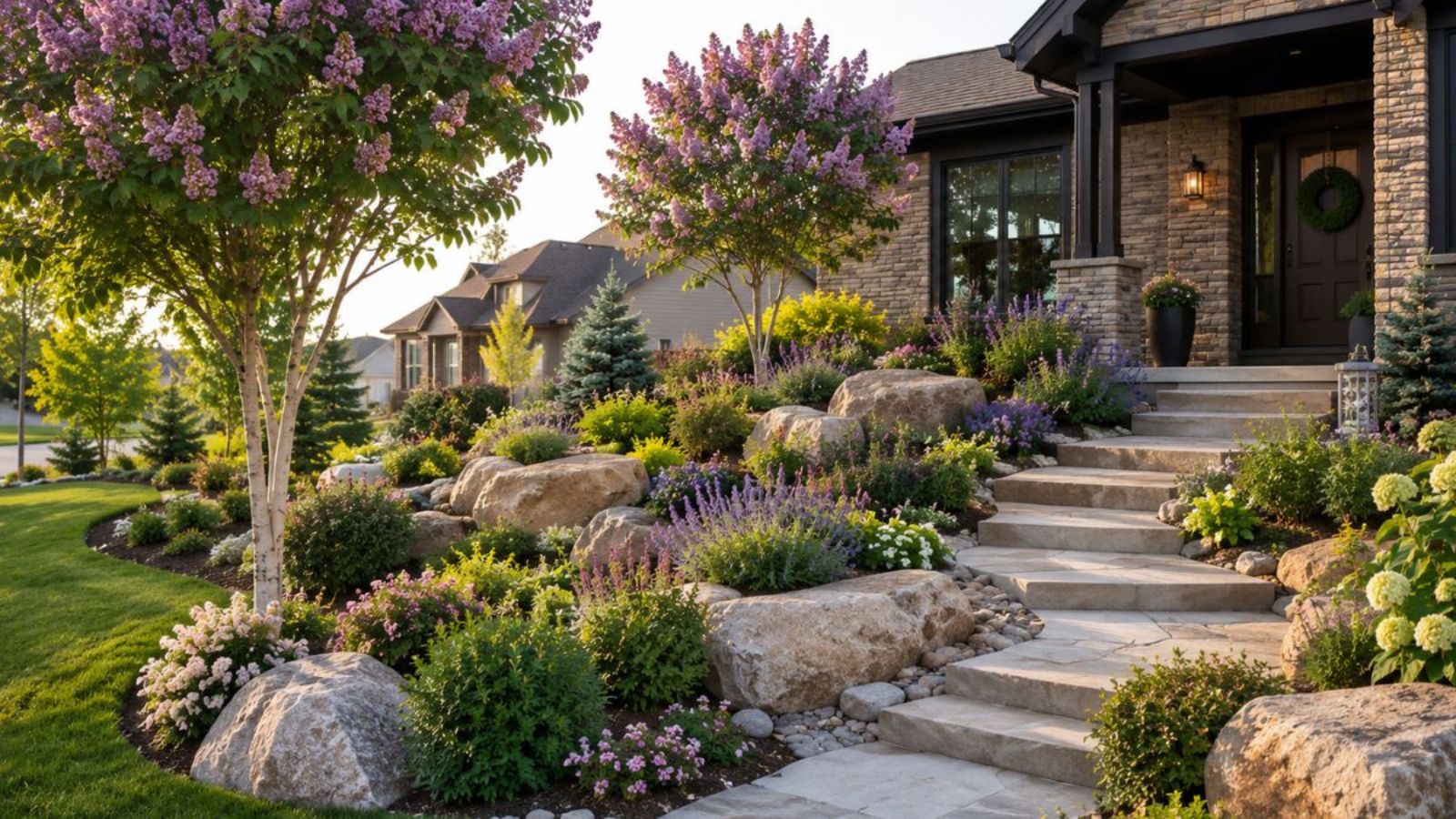
A landscape can look convincing on a screen and still create problems once it is planted in an Omaha yard. That is a practical concern with AI landscape design. A generated image cannot confirm that every plant will survive and thrive on a specific property.
AI can suggest plant combinations, arrange beds, and show what a finished yard might look like. The harder part begins when those recommendations meet actual soil, sunlight, drainage, winter exposure, mature plant size, and maintenance requirements.
The key distinction is between a plant that can survive in Omaha and one that is well suited to a particular location in an Omaha yard.
A Good Plant List Is Not Always a Good Plan
A common misconception is that an AI generated plant list becomes reliable once the recommended species are known to grow in Nebraska. An AI landscape design can provide a useful starting point, but each recommendation still needs to be evaluated against the actual planting site.
Before installation, each recommendation should be evaluated for:
- Sun exposure: Full sun, partial shade, and seasonal changes can produce different results.
- Soil and drainage: Some plants tolerate wet conditions while others need well-drained soil.
- Mature size: A small shrub can eventually outgrow a narrow bed.
- Site exposure: Wind, pavement, and nearby structures can change growing conditions.
- Maintenance: Watering, pruning, and seasonal care should match the property’s needs.
This is where professional landscape experience matters. A design should be evaluated based on what will happen after several growing seasons, not only how the planting will look when installed.
Different Growing Conditions in Omaha Yards
A recurring planning mistake is treating an entire property as one growing environment. In practice, a single yard can contain several microclimates.
For example:
- A south- or west-facing bed may receive intense afternoon heat.
- A north-facing area may remain considerably shadier.
- A low section may retain water after rainfall.
- A bed beside pavement may experience more reflected heat.
- An exposed location may receive more wind than a sheltered area.
A plant can therefore be appropriate for Omaha but unsuitable for the specific location where an AI design places it.
The same issue applies to trees. Antler Country Landscaping considers factors such as mature size, placement, and root systems when selecting trees, including evergreen, deciduous, and ornamental varieties.
A digital rendering shows where a tree looks good today. A workable plan also considers where its canopy and root system will be years later.
How Plants Change as They Mature
Digital designs often make newly planted landscapes look full immediately. Actual plants start much smaller and need room to grow. This is one reason an AI landscape design should be reviewed with mature plant dimensions in mind rather than judged only by the appearance of the rendering.
The practical question is: Will the design still work when the plants reach their expected size?
| Design Element | What to Evaluate |
|---|---|
| Shrubs | Mature height and width |
| Trees | Canopy size, root space, and proximity to structures |
| Perennials | Expected spread and seasonal growth |
| Plant spacing | Room for mature growth |
| Walkways and windows | Future clearance |
| Plant groupings | Whether faster growing plants will crowd others |
An initially open bed is not necessarily a poorly designed bed. Leaving room for growth can prevent overcrowding and excessive pruning later.
A plant does not have to die to be a poor choice. A shrub that survives but constantly needs pruning to keep a walkway clear may have been placed incorrectly from the beginning.
Survival Is Only Part of the Decision
A plant may survive Omaha’s conditions but still perform poorly in a particular location. Another may perform well but require more maintenance than the homeowner wants.
Antler Country Landscaping describes ornamental grasses as useful for adding texture and seasonal movement, while flowering perennials can provide recurring color after establishment.
The relevant question is not simply whether a plant is suitable for Omaha. It is whether the plant fits the conditions and purpose of the bed.
Before accepting an AI recommendation, consider:
- Will it receive the right amount of light?
- Will the soil provide appropriate moisture conditions?
- Will the mature plant fit the available space?
- Does its maintenance level fit the property?
- Does it contribute something useful to the overall landscape?
A landscape is more than a collection of plants. Trees, shrubs, flowers, grasses, lawn, hardscape, and circulation areas need to function together.
How to Check an AI-Designed Yard Before Planting
An AI generated design does not need to be discarded. It can help communicate preferences for colors, textures, bed shapes, and overall style. A professional review of an AI landscape design can help identify plant choices or placements that may not work well under the property’s actual conditions.
Before purchasing plants, review the concept in this order:
Identify the exact plants.
Generic labels are not enough. The species or cultivar needs to be known before its requirements can be evaluated.
Check each planting location.
Consider sunlight, drainage, exposure, and available space.
Check mature dimensions.
Compare expected size with structures, walkways, windows, utilities, and nearby plants.
Review the soil and drainage.
A suitable plant can still struggle if roots remain excessively wet or the soil does not support establishment.
Consider long-term maintenance.
Frequent pruning or watering may not suit a landscape designed for minimal upkeep.
Review the complete layout.
Planting should work with lawn areas, edging, drainage, retaining walls, and other landscape features.
Antler Country Landscaping offers personalized landscape design and one-on-one design sessions along with installation and landscape services, providing an opportunity to evaluate a concept against the actual property.
The final plan may not look exactly like the AI rendering. That is not necessarily a problem. The objective is to preserve the desired look while correcting choices that could create problems later.
Frequently Asked Questions
Can an AI-generated plant list be used without changes?
It can provide a starting point, but individual plants and locations should be evaluated before installation. A general recommendation cannot account for every property’s conditions.
Can a plant survive but still be a poor choice?
Yes. Survival does not necessarily mean good long-term performance. A plant that requires constant pruning or outgrows its space may not be practical.
Why can two planting beds need different plants?
Sunlight, shade, drainage, wind, reflected heat, and soil conditions can vary significantly across one property.
Why does mature plant size matter?
Available space does not increase as a plant grows. Checking mature dimensions helps prevent overcrowding, blocked walkways, and conflicts with structures.
What should happen if an AI recommendation seems questionable?
Identify the exact species or cultivar and evaluate it against the proposed location. If it does not fit the site’s conditions or mature space, another plant can provide a similar visual function.
Antler Country Landscaping Omaha
Antler Country Landscaping was incorporated in 1997 and, over the years, has grown to offer professional landscape services, lawn care, and outdoor living spaces. Our mission is to enhance your outdoor experience. Contact us to learn more about our Omaha landscaping services.