
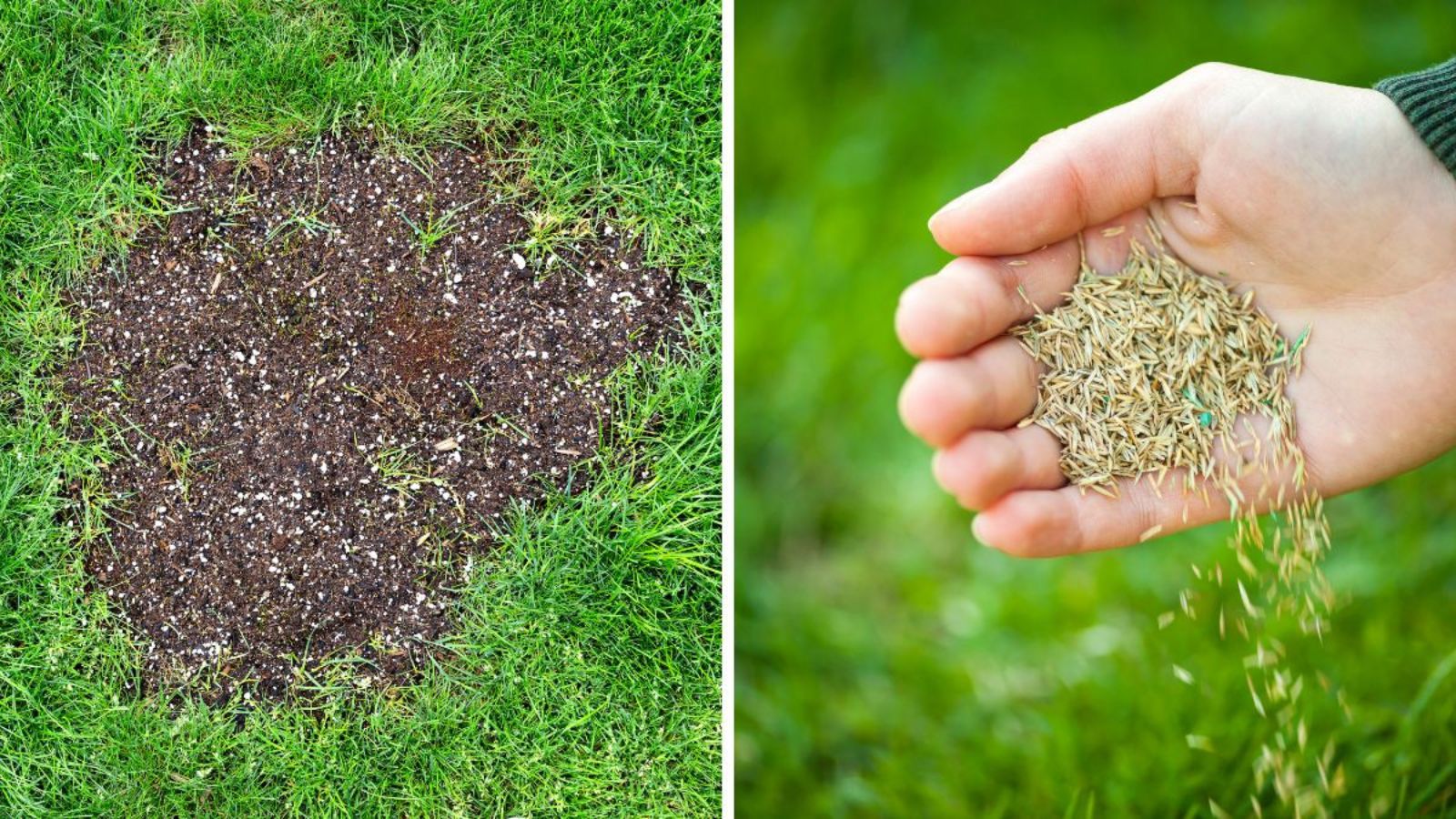
By late summer, many lawns no longer look the way they did in spring. Areas that handled heat, foot traffic, pets, or dry conditions poorly often begin to stand out, leaving homeowners wondering whether a few bare spots need attention or if the entire lawn has become thin.
This is where the decision between patch repair vs. overseeding becomes important. Although both methods involve adding new grass seed, they address different yard conditions.
Choosing the right approach starts with evaluating the pattern of the damage rather than treating every thinning lawn the same way.
Why Late Summer Is Often the Best Time for Lawn Repairs
Late summer is a common window for repairing cool-season lawns because soil remains warm while daytime temperatures gradually become less stressful for new grass.
Just as important, the existing lawn makes problem areas easier to identify than it does earlier in the season. Thin sections, worn paths, and bare spots have usually become well established by this point, allowing repairs to focus on the areas that truly need attention.
Another advantage is timing. Grass established in late summer often has several weeks to develop before winter dormancy, making this period well suited for both targeted repairs and broader lawn improvement.
Understanding Patch Repair VS. Overseeding
Although both methods involve applying grass seed, the purpose behind each approach is different.
Patch repair focuses on localized damage
Patch repair is typically recommended when healthy grass surrounds clearly defined bare or damaged areas.
These situations commonly include:
- Pet-damaged spots
- Areas disturbed during landscape projects
- Sections worn by repeated foot traffic
- Localized damage from disease or insects
- Bare soil left after removing weeds
Instead of disturbing the entire landscape, repairs remain limited to the affected sections.
Overseeding improves overall turf density
Overseeding spreads grass seed throughout existing turf to introduce new plants across the lawn.
It is commonly considered when:
- Grass appears thin across large areas
- The lawn has gradually lost thickness over several seasons
- Small gaps are scattered throughout the yard
- Older turf struggles to fill in naturally
Rather than replacing the lawn, overseeding helps strengthen the existing stand of grass.
How Lawn Professionals Make the Decision
The amount of visible damage is only part of the evaluation. During lawn assessments, equal attention is often given to the condition of the remaining grass.
For example, a lawn with several bare patches but otherwise thick, healthy turf may respond well to patch repair alone. By contrast, a lawn with very few bare spots can still benefit more from overseeding if grass plants have become widely spaced throughout the yard.
Another observation that frequently comes up is that homeowners naturally focus on the largest damaged area. However, the isolated bare spot is not always the primary issue. The more significant problem may be the gradual loss of density across the rest of the lawn, which becomes noticeable only after comparing different sections of the yard.
Looking at both the damaged areas and the surrounding turf usually provides a clearer picture of which repair strategy will produce a more consistent result.
Correct the Cause Before Adding More Seed
Adding seed without identifying why the lawn declined often leads to the same problems returning.
Several conditions commonly contribute to thinning grass:
- Soil compaction
- Inconsistent watering
- Excessive shade
- Heavy foot traffic
- Improper mowing height
- Summer heat stress
It is not unusual for neighboring lawns to require different repair strategies despite having similar grass varieties. Small differences in shade, irrigation coverage, or daily use can change how the lawn responds throughout the growing season.
Identifying these conditions first helps ensure new grass has a better opportunity to establish successfully.
Preparation Has a Bigger Impact Than Many Homeowners Expect
Successful lawn repairs usually begin before any seed is applied.
Preparation often includes:
- Removing dead grass and debris
- Loosening compacted surface soil
- Leveling shallow depressions where needed
- Creating good seed-to-soil contact
- Maintaining consistent moisture during germination
A common mistake is applying seed directly over matted dead grass or compacted soil. Even when seed is spread evenly, much of it may never reach the soil surface where germination occurs.
This is one reason two lawns seeded on the same weekend can produce very different results. The difference often comes from how well the lawn was prepared rather than the amount of seed that was used.
When Both Methods Belong in the Same Lawn
Many late summer lawns do not fit neatly into a single category.
A property may contain heavily worn pathways that require patch repair while the remaining turf has gradually become less dense over time.
In these situations, combining both methods often produces a more balanced result.
| Solution | Primary Purpose |
|---|---|
| Patch Repair | Restores isolated bare or damaged areas |
| Overseeding | Improves density across existing turf |
Treating only the obvious bare spots may leave the rest of the lawn looking thin. Likewise, overseeding alone may not establish well in completely bare areas that require additional preparation first.
Matching each repair method to the condition of the lawn often creates a more uniform appearance heading into the next growing season.
Signs It Is Time to Repair the Lawn
Late summer damage rarely improves on its own once grass has become noticeably thin or worn.
A lawn may be ready for repair if there are:
- Bare areas that continue to expand
- Thin grass across large sections
- Worn traffic paths
- Uneven turf density
- Soil visible between grass plants
Areas that recover more slowly than the surrounding lawn after mowing
Addressing these conditions before the growing season ends generally provides better opportunities for new grass to establish than waiting until the following year.
Choosing the Right Approach for Long-Term Results
Understanding patch repair vs. overseeding begins with evaluating how the lawn has changed over the course of the season rather than simply looking for bare spots. Patch repair is generally best suited for isolated damage, while overseeding helps restore density across lawns that have gradually become thin.
Many properties benefit from using both methods together after identifying the conditions that caused the decline. Matching the repair strategy to the lawn’s actual condition often leads to healthier, more consistent turf as the next growing season approaches.
Frequently Asked Questions
Is patch repair better than overseeding?
Neither method is universally better. Patch repair works well for isolated bare areas, while overseeding is typically more effective when thinning occurs throughout the lawn.
Can patch repair and overseeding be done at the same time?
Yes. Many lawns benefit from patch repairing bare spots while overseeding the remaining turf to improve overall density.
Why does my lawn keep developing thin areas every summer?
Repeated thinning may result from heat stress, soil compaction, shade, heavy traffic, watering practices, or other underlying growing conditions that should be addressed alongside reseeding.
Should bare spots be repaired before overseeding?
In many cases, yes. Preparing and repairing severely damaged areas first helps create more consistent establishment across the lawn.
Will overseeding fill bare areas?
Not always. Completely bare spots often require more focused preparation and targeted patch repair before new grass can establish successfully.
Antler Country Landscaping Omaha
Antler Country Landscaping was incorporated in 1997 and, over the years, has grown to offer professional landscape services, lawn care, and outdoor living spaces. Our mission is to enhance your outdoor experience. Contact us to learn more about our Omaha landscaping services.