
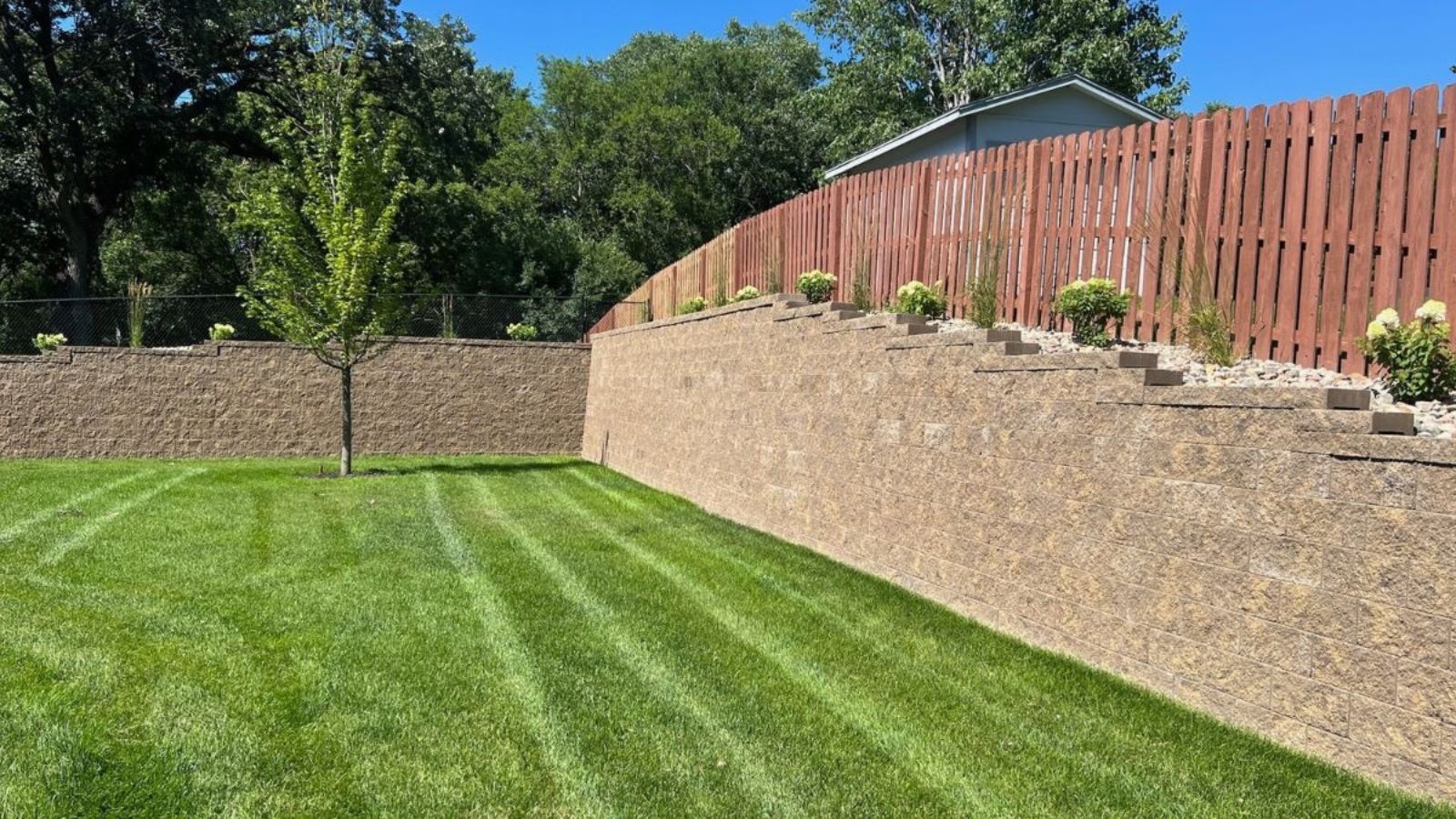
A sloped backyard can make outdoor dining, gardening, and recreation difficult. For Omaha homeowners, the solution does not necessarily involve flattening the entire property. Working with the existing elevation can create usable spaces while limiting unnecessary excavation.
The best approach depends on the slope, soil conditions, drainage, and intended use. Retaining walls, steps, patios, and planting areas can help make the yard more functional.
Start With the Backyard’s Main Limitation
Identify what makes the slope difficult to use before choosing landscaping features. Consider these priorities:
- Outdoor living: A level patio or terrace creates space for dining and relaxation.
- Easier maintenance: Replacing steep lawn areas with suitable planting beds may reduce mowing.
- Better access: Steps or walkways connect different elevations.
- More planting space: Terraced beds accommodate flowers, shrubs, and other plants.
Choosing a primary goal helps determine which improvements to prioritize and whether the project can be completed in stages.
Create Level Areas With Retaining Walls and Terraces
Retaining walls hold back soil and create flatter areas for patios, lawns, or gardens. Terracing divides a slope into multiple levels rather than flattening the entire yard. An upper terrace might provide outdoor dining space, while a lower level accommodates a garden.
Before installing a retaining wall, consider:
- Wall height: Taller walls may require professional design and structural support.
- Foundation: The wall needs suitable support for the soil and slope conditions.
- Drainage: Water must be managed to reduce pressure behind the wall.
- Local requirements: Permits or engineering plans may be necessary, depending on wall height and applicable codes.
Poor construction or inadequate drainage can contribute to wall movement and soil loss. Taller walls and complex grade changes may need professional assessment before work begins.
Combine Retaining Walls, Steps, and Planting Areas
These features work best when planned as one connected layout. Each serves a distinct purpose:
- Retaining walls: Create level ground for patios or garden beds.
- Steps: Provide access between terraces.
- Planting areas: Soften hard surfaces, add color, and cover exposed soil.
For example, a retaining wall could create a level patio near the house, with steps leading to a lower garden. Shrubs or ornamental grasses along the wall can soften the transition between levels.
The arrangement should suit the property’s shape. A broad slope may accommodate several terraces, while a narrow yard might benefit from fewer levels and a direct staircase. Leave enough room to maintain planting beds, and position plants so mature growth does not obstruct paths or interfere with wall drainage.
Position Patios and Walkways for Everyday Use
A patio near the house can make outdoor dining convenient, while a lower seating area may offer a quieter place to relax. Its location and construction should account for the surrounding grade.
When planning patios and walkways, consider:
- Base preparation: Use a stable base suited to the materials and site conditions.
- Surface grading: Prevent water from collecting on paved areas or near buildings.
- Safe access: Plan comfortable routes between different elevations.
- Material selection: Choose surfaces suited to local moisture and freeze-thaw cycles.
Walkways should connect frequently used areas without awkward transitions. Steps and paths should also remain practical during wet weather.
Use Planting to Cover Exposed Soil
Plants add color and texture to a hillside while helping protect exposed soil from erosion. Suitable choices depend on sunlight, moisture, soil conditions, and maintenance needs.
- Ground covers: Fill areas where mowing is difficult.
- Ornamental grasses: Add texture and movement.
- Perennials: Provide seasonal color.
- Shrubs: Define planting beds and terrace edges.
For Omaha properties, choose plants suited to local growing conditions. Sunny, dry slopes may need different plants from shaded or consistently moist areas.
Planting can help stabilize soil once suitable plants establish healthy roots, but it cannot resolve every erosion problem. If runoff repeatedly cuts channels through the ground, address the water source before replanting.
Address Drainage Before Finishing the Landscape
Runoff can carry soil downhill, collect in low areas, or put pressure on retaining walls. Changes to grading and paved surfaces can also alter where water flows.
After rainfall, look for:
- Exposed roots or bare patches
- Channels cut through soil or mulch
- Standing water at the bottom of the slope
- Muddy areas beside patios or walkways
- Water collecting near the house or behind walls
The appropriate solution depends on the problem and the site’s layout.
| Problem | Potential Solution | Why It Matters |
|---|---|---|
| Soil erosion | Establish suitable ground covers or install erosion-control measures. | Helps hold soil in place and reduce surface erosion. |
| Water collecting in low areas | Adjust grading or install a suitable drainage system. | Helps prevent persistent puddles and saturated soil. |
| Water accumulating behind a retaining wall | Incorporate properly designed drainage behind the wall. | Reduces water pressure that can affect wall stability. |
| Runoff near the foundation | Correct grading or install appropriate drainage improvements. | Directs water away from the house. |
Drainage changes should not redirect water toward neighboring properties or buildings. Persistent erosion, ground movement, or recurring water near the foundation may require professional evaluation.
Choose a Design That Fits Your Maintenance Plans
A landscape should suit the way you intend to use and maintain it. Steep lawns can be difficult to mow, while extensive planting beds may require regular weeding, pruning, and seasonal cleanup.
Before finalizing the design, consider:
- Lawn care: Will the remaining grass be manageable to mow?
- Plant growth: Will shrubs and trees have enough room as they mature?
- Project costs: Does the budget account for preparation, materials, drainage, and structural work?
- Future use: Can the layout accommodate changing household needs?
Antler Country Landscaping serves the Omaha area with landscaping and outdoor improvement services. Homeowners can discuss their intended uses and site conditions to explore suitable options.
Make a Sloped Backyard Work for You
Start by identifying what limits your backyard, whether it is difficult access, limited usable space, or erosion. Then prioritize improvements that address the problem and suit the terrain. A thoughtful combination of hardscaping and planting can make the space more functional without flattening the entire property.
Frequently Asked Questions
Can a sloped backyard accommodate a fire pit?
Yes, if there is a suitable level area with adequate clearance from structures, plants, and other combustible materials. Follow the manufacturer’s instructions and local safety requirements.
Is artificial turf suitable for a sloped backyard?
It can work on some slopes, depending on the product, drainage, and installation method. Proper base preparation and secure installation help prevent movement.
Can a sloped backyard include a play area for children?
Yes. A play area needs a stable surface, appropriate fall protection, and adequate drainage. Follow the equipment manufacturer’s instructions and plan safe access.
How can you tell if a slope needs professional attention?
Warning signs include ongoing erosion, exposed roots, ground movement, leaning retaining walls, and water collecting near the foundation. These may indicate drainage or stability problems.
Do all retaining walls require a permit?
Not necessarily. Requirements depend on local regulations, wall height, location, and site conditions. Check with the relevant local authority before construction.
Antler Country Landscaping Omaha
Antler Country Landscaping was incorporated in 1997 and, over the years, has grown to offer professional landscape services, lawn care, and outdoor living spaces. Our mission is to enhance your outdoor experience. Contact us to learn more about our Omaha landscaping services.